
Technology
Laser Technology, Visian ICL™, ReZoom™/ReSTOR®, Crystalens® Lens Implants — St. Louis
At Mulqueeny Eye Centers, we believe that being the best one for the job means having the right tools. When it comes to the safety, accuracy, and outcome of any type of eye surgery, technology makes a difference. Therefore, we are proud to offer the latest laser technology with the ALLEGRETTO WAVE® EYE-Q featuring Wavefront Optimization™, as well as ReZoom™, ReSTOR®, Crystalens®, and Visian ICL™ lens implants at our St. Louis office. Sean P. Mulqueeny, O.D. and our team of surgeons are experienced in lens implant surgery and the use of the other technologies described below.
- Custom LASIK — The ALLEGRETTO WAVE® EYE-Q Laser System with Wavefront Optimization™
- Visian ICL™, ReZoom™ and ReSTOR® Lens Implants
- Visian ICL™ -Implantable Contact Lens
- ReZoom™ and ReSTOR® Multifocal Implants
- Crystalens® Accommodating Lens Implant
Custom LASIK - The ALLEGRETTO WAVE® EYE-Q Laser System with Wavefront Optimization
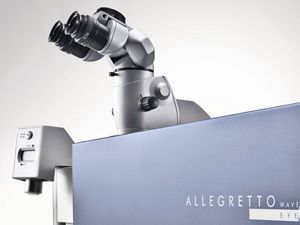
During LASIK laser eye surgery at our St. Louis surgical center, we use the technologically advanced ALLEGRETTO WAVE® EYE-Q laser. This laser system consistently provides exceptional results for our patients. Its state-of-the-art PerfectPulse™ technology allows for a LASIK treatment that is both precise and safe. PerfectPulse™ technology gives the ALLEGRETTO WAVE® EYE-Q laser many advantages over other excimer lasers, including the ability to measure and adjust the energy level in each laser pulse, as well as the ability to track the movements of the eye with great precision. These distinct features ultimately allow us to achieve the most accurate correction possible. Designed for speed, ALLEGRETTO WAVE® EYE-Q is one of the most efficient lasers available today, and one of the most accurate. The entire system is Wavefront Optimized™, allowing us to perform a Custom LASIK procedure — that is, a procedure that addresses your eyes’ unique eye shape.
Click here to learn more about the unique technology and benefits of the ALLEGRETTO WAVE® EYE-Q laser system, or contact us today for a consultation with one of the LASIK eye surgeons at Mulqueeny Eye Centers.
Visian ICL™, ReZoom™, ReSTOR®, and Crystalens® Lens Implants
You’ll be amazed at how far cataract surgery has advanced since the days of your parents and grandparents! ReSTOR®, ReZoom™ and Crystalens® lens implants, offered at our St. Louis, Missouri practice, are an excellent choice for patients whose vision has deteriorated due to a cataract and who desire vision correction that provides them with a full range of vision. ReSTOR®, ReZoom™ and Crystalens® lens implants are also a viable option for patients who suffer from presbyopia (age-related loss of near vision), and are not good candidates for LASIK surgery.
The Visian ICL™ implantable contact lenses, which provide distance correction only, are a great alternative for patients who are not good LASIK candidates due to a high myopic prescription or corneas that are too thin. This refractive surgery option is best for patients age 21-45 who are not good candidates for LASIK or who prefer an alternative procedure to LASIK that does not permanently change the shape of the cornea.
Visian ICL™ Implantable Contact Lenses
For those with nearsightedness (myopia), Visian ICL™ implantable contact lens technology acts like a contact lens inside your eye. Just like ReZoom™, ReSTOR® and Crystalens® lens implants, the Visian ICL™ lens stays in place with no maintenance, does not attach to any of your eye's structures, and is invisible to other people. The surgeons at Mulqueeny Eye Centers were chosen to perform Visian ICL™ implantable contact lens surgery on the first patients in the St. Louis metropolitan area, and our team continues to be the most experienced providers of the Visian ICL™ for this area.
Read more about Visian ICL™ lens implants
ReZoom™ and ReSTOR® Multifocal Lens Implants
ReZoom™ and ReSTOR® intraocular lens implants replace your eye’s natural lens when it has become clouded and discolored by cataracts. We can easily implant ReZoom™ or ReSTOR® lens implants during cataract surgery at our St. Louis office. Implanted lenses like these reduce or eliminate the need for glasses and bifocals following cataract surgery.
Crystalens® Accommodating Lens
Like the ReSTOR® and ReZoom™ lens, the Crystalens® intraocular implant is an implant that replaces your natural lens inside the eye. This lens may be implanted during cataract surgery, or it may be chosen as an elective procedure by patients who are not considered good candidates for LASIK or other vision correction procedures and want to reduce or eliminate their need for glasses or contact lenses. For patients of all ages, this lens is a good choice because it allows good vision at all distances—distance, intermediate, near and everything in between.
Contact Us
Dr Mulqueeny is friendly yet very professional. He cares about his patients and will take the time to talk and answer any questions. I would tell anyone to go see him.
Visit Our Office

